the coming year
with volcanoes
Annsisters changes focus this year, as we’re off to Merrie Olde Englande, folk Italy, 19th century and 1970s England and Berkeley in the 1920s, for an exploration of the Middle Ages, middle age, and Medieval Revival(s).
For the past six-plus years, I have been focused on the stories of women in New England history. Women who could be models and inspirations for me, models both for how to be a woman, and how to live in the place I called home. I studied how they built community and interpreted the past, combining mysticism with outsider scholarship and a dash of race consciousness, from radical antebellum intellectuals to the social Darwinist antiquarians of the early 20th century. I studied how the past gave them refuge and respite, allowing them to create female-only living and learning spaces and white-only imaginaries, sometimes both at the same time. I made offerings to the complexities and personal affinities of these women, their failures and griefs, and considered how often food manifested in their work, as expressions of a fleetingly better future, their own offerings to care and nurturance in the present, to sustaining their minds and their domesticity.
We visited the Classical Revival and the Colonial Revival together. The women who fought slavery by invoking the ancient legacy of democracy and equality, who educated themselves and each other in ancient languages and the rigorous demands of textual scholarship, and who participated in creating uniquely American culture and spirituality by looking backwards. The women who looked to the early years of colonization of their homes to ask how they belonged there, to honor their great grandmothers and try to preserve the folk culture that was rapidly being paved over, to entrench their moral authority over more recent arrivals. I baked cakes. I know that when many of you bake cakes, you think of your own ancestors, and I think that is beautiful.
I told myself that when I moved to California I would finish the calendar year with the New England Annsisters who I had been studying for the better part of a decade. I would try to distill what I knew, reshare some of what had originally been shared through Instagram and in-person talks, and do justice to the multiyear project that began by asking “where is a woman’s imagination?” and “what does New England mean to the 21st century?” I still feel like I need to answer that last question for you and for me more fully — but the work is mostly done. Someday it will be a book, and a divination deck, so that you can work with the stories and objects and recipes and make them your own. I’m sure I’ll share more of that as it develops. I’d love to hear from you.
BUT NOW. IT’S TIME!
I have new questions about this new place where I live, which is actually the first place I ever lived. I want to tap a seam that has been running alongside the stories I’ve been telling, and let it run its wild course, in me, in you, in us. It is THE MEDIEVAL.
But you’re in California, Sister Diana Ruta! You say. Surely Medievalism is a bit…anachronistic?
To which I say, YES! And, I grew up surrounded by fairy tale cottages wreathed in brambles of roses. The Medieval imagination is alive and well, here on the Pacific coast of America. And so is anachronism.
Together, we’ll learn about the actual Middle Ages, the remnants of the Middle Ages that we still use and live with today, and the many Medieval Revivals, which I think have had such powerful appeal because the Middle Ages represent, to the Eurocentric imagination, the time of enchantment. It’s the time before enclosure, before Reformation, before colonialization (though it was very much multicultural and global). It’s the time when there were still ancient forests in Western Europe, the forests in our imaginations that we still tell stories about. It’s the time of the Village, in its perils and power for rootedness and mutuality, trust and betrayal. The Medieval is the opposite of the Modern, in some formulations; when our world creates alienation and destruction, Medieval aesthetics and stories often seem like an antidote. At the same time, when our world promises liberation and abundance, the Medieval can be used to represent ignorance and brutality.
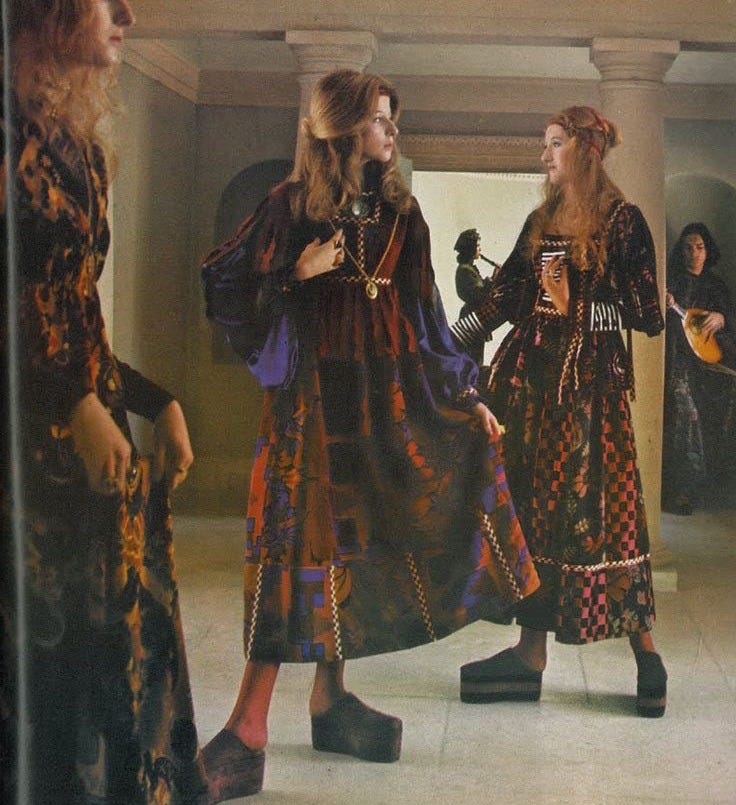
But as we know, binaries are fake, humans are complicated, and there are no good old days, or bad ones. What is real is the need of our hearts and the sustenance of our bodies and the body of the planet. So I want to ask, how can we learn from the promise and pitfalls of Medieval revival, to authentically re-folk and re-enchant ourselves today? How can stories of people looking to an earlier time help us figure out how to get what we need in OUR time, and create a future where it is sustained?
I have the feeling that studying the Medieval with empathy and rigor will allow us to notice the way we create cultural pathways to try to meet longings and grief, and open up new ways for doing this that flow from both tradition and presence. I also think that as always we’ll find women to admire for their ferocious devotion to care and beauty.
If you have ideas or want to participate in this project, please let me know! I would love to talk to scholars and folk practitioners about their work. I’ll share a want list shortly. Can’t wait to start this crazy journey with you.
Thank you, annsisters, for showing me how to show up and work for community, to live deeply in a place, to learn with others without the control of an institution. Thank you for helping me grow up. For giving me a new story, and your stories.
Today (Feb 6) is the Feast Day of St. Agatha, a very early Medieval Saint. I am thinking a lot about her in my California life, as she is connected with the life-giving destruction of Mount Etna, on Sicily, and I’m recently spending time with volcanic hot springs and dried lava beds, and the little jolts that the living earth sends to wake me in my bed. I’m also thinking a lot about snakes, like the rosy boa that lives in my 10 year old’s room. I’m waiting for them (not yet sexed) to shed their skin, just like Agatha shed and regenerated her breasts. Loss and rebirth, those deep tectonic feminine powers. The terror of living in its shadow, the wonder and abundance of receiving its gifts of nourishment.
St. Agatha means more to me this year than Brigid and the Cailleach, though I’m thinking offerings to the witch of winter to keep sending rain might be useful, as it’s been so sunny and dry these past six weeks that we started saving our shower water in buckets like during summertime. So many of the rituals and characters of my practice have to change to respond to my new bioregion. It’s a reminder that tradition and practice can change, and be responsive. I’m still me, still rooted, and grounded. And I know, like my ancestors who crossed oceans did, that they are in my pockets, but they will not work in the same way as they did before. My Yankiness and Western European folklore will be applied in a new context, and be influenced by their terroir and coplantings just as in a garden. My Sicilian and Northern Italian heritage also in some ways finds new resonances as I attune to this place, which shares so much in common in its terrain and climate with their source. But California is not Italy, and now is not then, so still things change. I have my antennae out to notice when a practice serves and doesn’t.
Sicilian-American folk lineage teacher MaryBeth Bonfiglio says that St. Agatha is “the Saint of re-connection,” which is what Annsisters is about, and is what I think Medieval Revival is often about — reconnection with a time when Europeans were still connected with their land, and with spirit and tradition. Sometimes that’s a fantasy. It’s also what my job is now: reconnecting with my practice after the dislocation of a move, reconnecting the place where I was born, reconnecting with the energy that drives me, nourishes me from core to surface, where I nourish others.
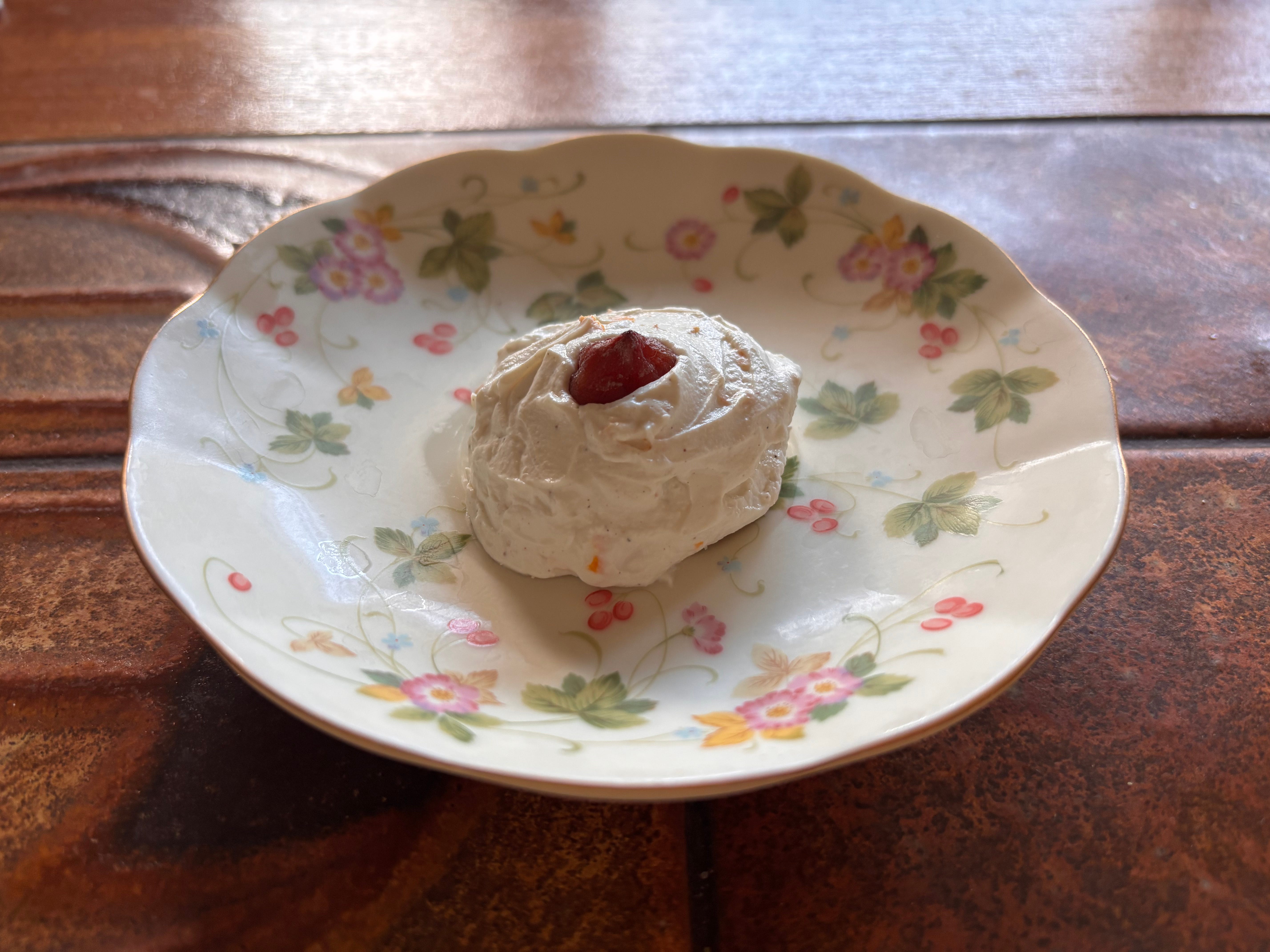
Traditionally St. Agatha is honored with a cake mounded with cassatta ricotta, and topped with a maraschino cherry to simulate her breasts. However I have had to cut out sugar (I know!) from my diet so I made myself a sugar-free version, which was, it turns out, totally divine. I mixed the cheese with orange zest and vanilla bean powder, and placed at the center a ball of pistachio butter that I’d mixed with a bit of butter for an earlier frangipanesque project, and topped it with the tip of a hoshigaki persimmon. Perky!