
seek the depths
Sarah Margaret Fuller Ossoli (May 23, 1810 – July 19, 1850)
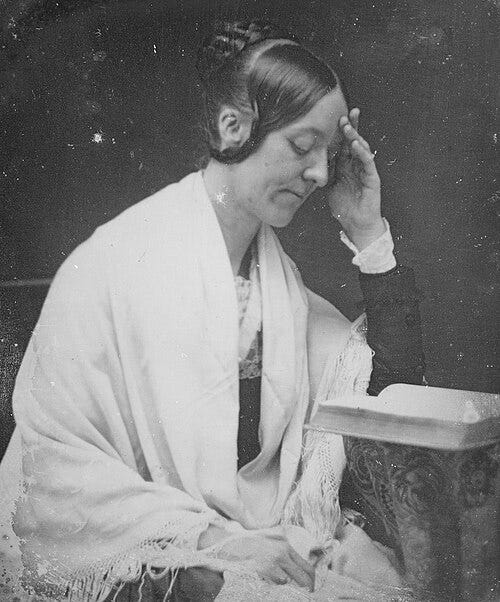
Margaret Fuller was part of the same Transcendentalist, proto-feminist, proto-communitarian circle as Elizabeth Palmer Peabody. Born in Cambridge, Massachusetts in 1810, she was a virtuosa of languages, not a great beauty, and destined for intellectual greatness. You don’t have to take my word for it; Fuller is “having a moment.” You can read any number of excellent biographical essays or books about Fuller. This is a relief to me, as I don’t care to write one. She’s never really been particularly interesting to me. I don’t feel the desire to call her Auntie, or Mother, or Sister.
Margaret Fuller was a journalist, a wartime correspondent, a true political radical, hanging with European revolutionaries. I found Woman in the Nineteenth Century dull to unreadable (though tbh I often find annsisters’ writings themselves quite boring; I’m in it for the stuff and the life, I guess). I’m, like, not that curious about the things she had to say about Ancient women and goddesses or “the woman question”, whether in the salon at Peabody’s West Street Library, or in one Boston drawing room or another. She was a woman intellectual, a historian of women, in 19th century Boston. She was a woman Transcendentalist, and annsisters began as a way to figure out what Transcendentalism meant to me. So I made her an annsister because, well, I figured she had to be.
I want to think about why this was. Maybe it’s because she spent so little time in the domestic sphere. She wasn’t a hostess, but the star of the Conversations. She published no recipes. She was restless. She dreamed of a better world, but she didn’t, as Peabody did for example, create such a world by creating microcosms of it around her. Instead, she went out, and thought thoughts and spoke to people and watched transformations on a large scale. She was in the middle of everything: running a hospital in Revolutionary Rome, having dinner with George Sand and Chopin, living through gunshots and writing dispatches home. Margaret Fuller’s stage was the world.
So why am I bothering. Well, it’s because she died at 40 and I can’t get out of my mind the question of what was in the manuscript that went down with her in a ship off of Fire Island, within sight of shore. It’s because when she died she was traveling to America after the failure of the Italian Revolution, with her fine young Italian husband and their toddler, Nino (Angelino), after decades of insisting that her power was in her freedom from men and from sex, escaping the domesticity that drowns brilliant women. I am captivated not by what Margaret was, but by the what ifs, by the intellectual and practical possibilities of the intense transformation she had just at the end of her life. If she had kept living, what would Margaret have written, what would she have cared about, as a mother and a wife? As a woman who was often (proudly) in men’s circles, how might motherhood have shifted her relationships and solidarities? How might the needs and negotiations of these relations shrunk and stretched her moral and political concerns?
The manuscript Margaret was carrying with her, it was a history of the Revolution and Republic, eagerly awaited by her American readers. Angelino had born in a refuge from war, the mountain town of L’Aquila, and raised by a wet nurse while Margaret went back into the conflict to nurse the men and ideals of the short-lived Republic. This lost manuscript, is one of the most tantalizing documents ever written, to me. It’s what inspired my longer imaginings about a lost library of women’s writings, the Lost Library of Latona. How might she have revised it after returning home? What would she have refused, and what would she have made peace with? How might she have discussed it with Ralph Waldo Emerson, after her decades away in the cauldron of European Revolution and the forge of childbirth?
The goddess Isis, who was worshiped continuously from Egypt to Rome for thousands of years, ruled both birth and the underworld. Life ender and life bringer, she brought her husband’s death and her son’s (sky-god Horus) life. She was often depicted holding a metal instrument called a sistrum, a metal rattle made by tiny disks that shake against each other along small rods that connect two sides of a u-shaped staff. She held the sistrum in one hand and a pail in the other, for catching the waters of the Nile as it flooded.
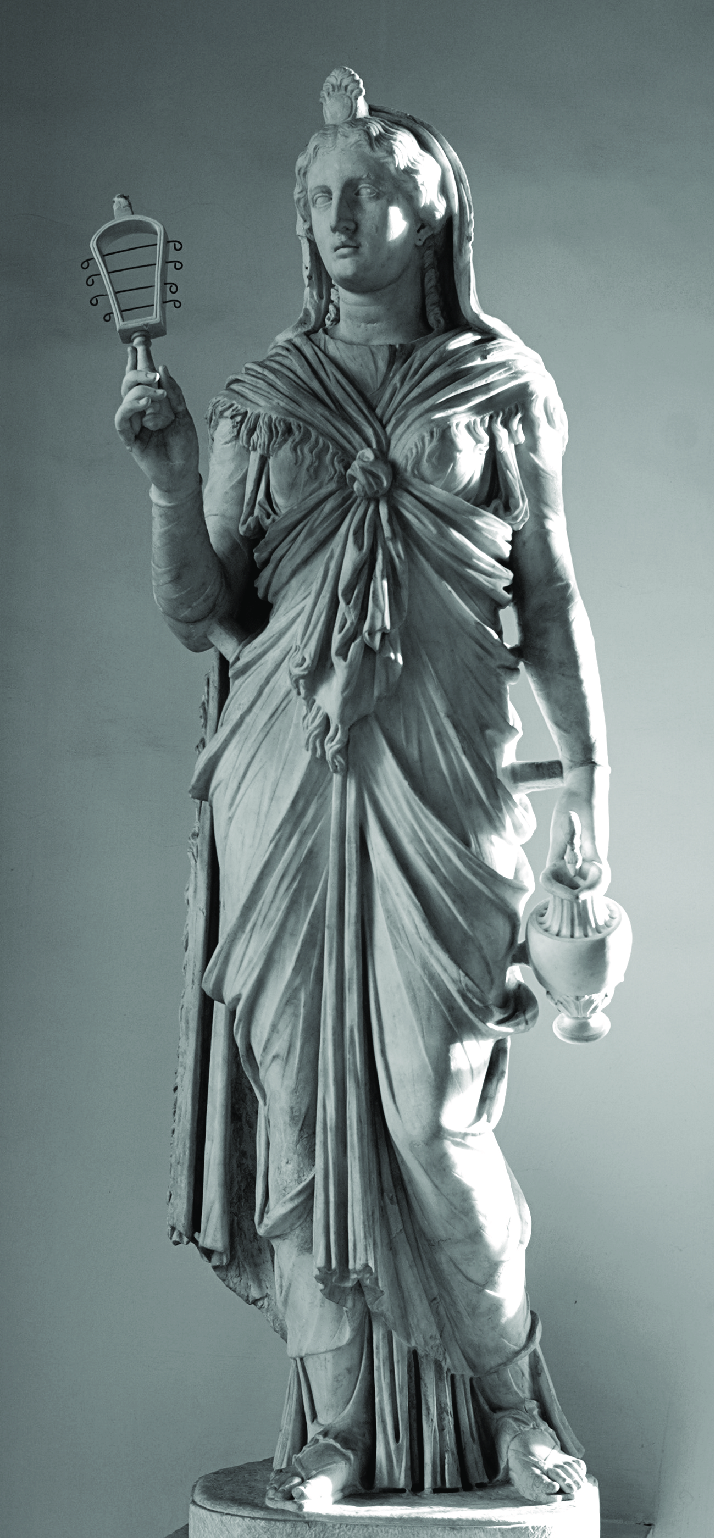
Margaret Fuller loved the sistrum. She planned to have one engraved on a gem (if she were alive now, she probably would have a sistrum tattoo). Its inharmonious rattle was restless, urging dead souls and living worshipers into constant motion. Like Fuller herself, the sistrum was “ungainly, ungentle, and unquiet,” writes Wai-Chee Dimock. I wonder often if she sought its jarring rattle while in the throes of labor.
She wrote a poem, which makes clear how the sound and the mystery of birth and death resonated with her faith that answers at the root of things could be found, and wondered at.
Sistrum
Triune, shaping, restless power,
Life-flow from life's natal hour,
No music chords are in thy sound;
By some thou'rt but a rattle found;
Yet, without thy ceaseless motion,
To ice would turn their dead devotion.
Life-flow of my natal hour,
I will not weary of thy power,
Till in the changes of thy sound
A chord's three parts distinct are found.
I will faithful move with thee,
God-ordered, self-fed energy,
Nature in eternity.
Even though Isis was Egyptian in origin, some Ancient Romans worshiped her and other similar death-birth goddesses, such as Cybele or the Magna Mater (Great Mother), both of whom also had ancient, Near Eastern or African origins. Ovid, an Ancient Roman poet exiled by the Emperor Augustus for a poem and a scandal, tells us in his collection of history, pseudohistories, myths and stories about the cycle of Roman holidays, about Megalesia, the celebration of the Magna Mater. He says that She came from Troy (in modern day Turkey) in year of Rome 549 (roughly 200BCE).
As he tells it, a group of nobles went East in search of a great Mother for their great City. In Troy, they found a cave, and within, a black stone, a stone which was an ancient Goddess without a face. The nobles wanted to bring Her back to their home. Then, longo tremuit cum murmure tellus (the earth trembled with a long rumble), and the Goddess said She would go with them. The messengers quaked with fear, and the Mother of gods was placed in a hollow ship which eventually beached on a muddy island in the thirsty Tuscan river. After She arrived, She was lifted and carried by a young woman, and placed in a wagon to travel to town, adorned with fresh flowers.
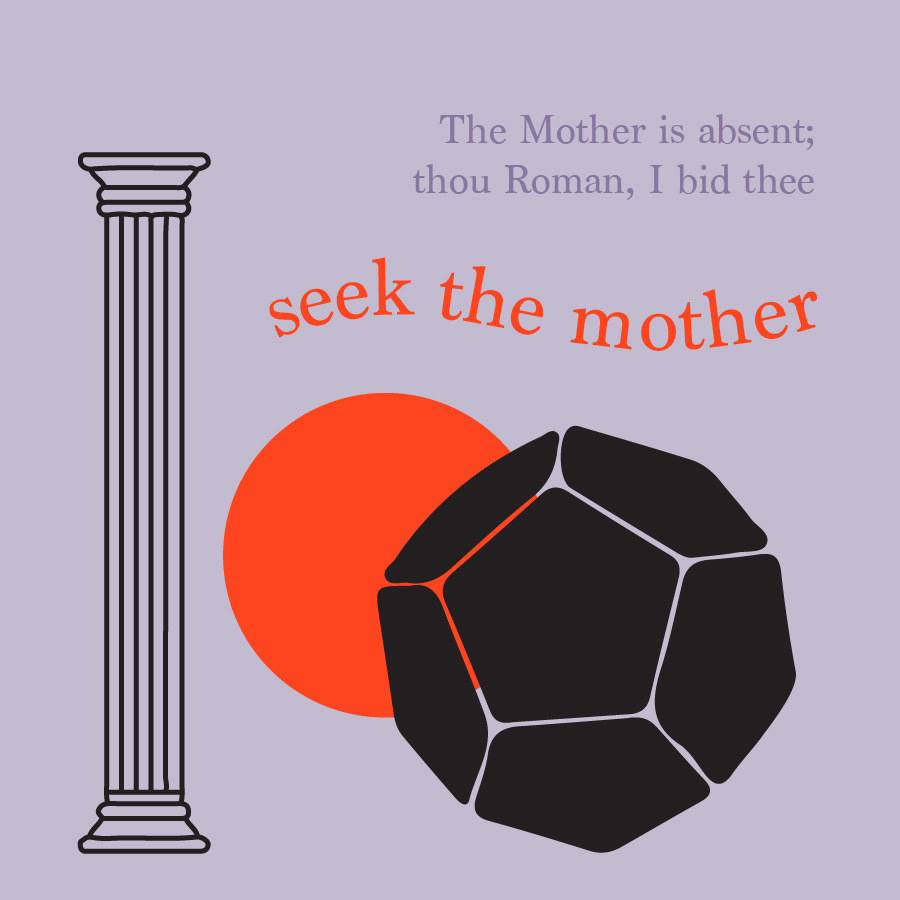
Cybele, another name for Magna Mater, was typically depicted astride a chariot pulled by wild lions, wearing a massive crown of the towers she gave to the first cities, attended by eunuchs who “thumped the brass and rumbling leather.” She was fierce and commanding, her will absolute, her body un-apologetically feminine. Her feast days were wild and raucous.
You could see this worship as a beautiful example of how Romans incorporated the gods and practices of so many people and cultures into their vibrant polyculture of living, abundant sacredness. You could see it as a disturbing reminder of the way Roman imperialism took everything as their own. You would be right about both. It doesn’t surprise me that Margaret Fuller found guidance from Isis. She was a woman of birth and death herself, at the end.
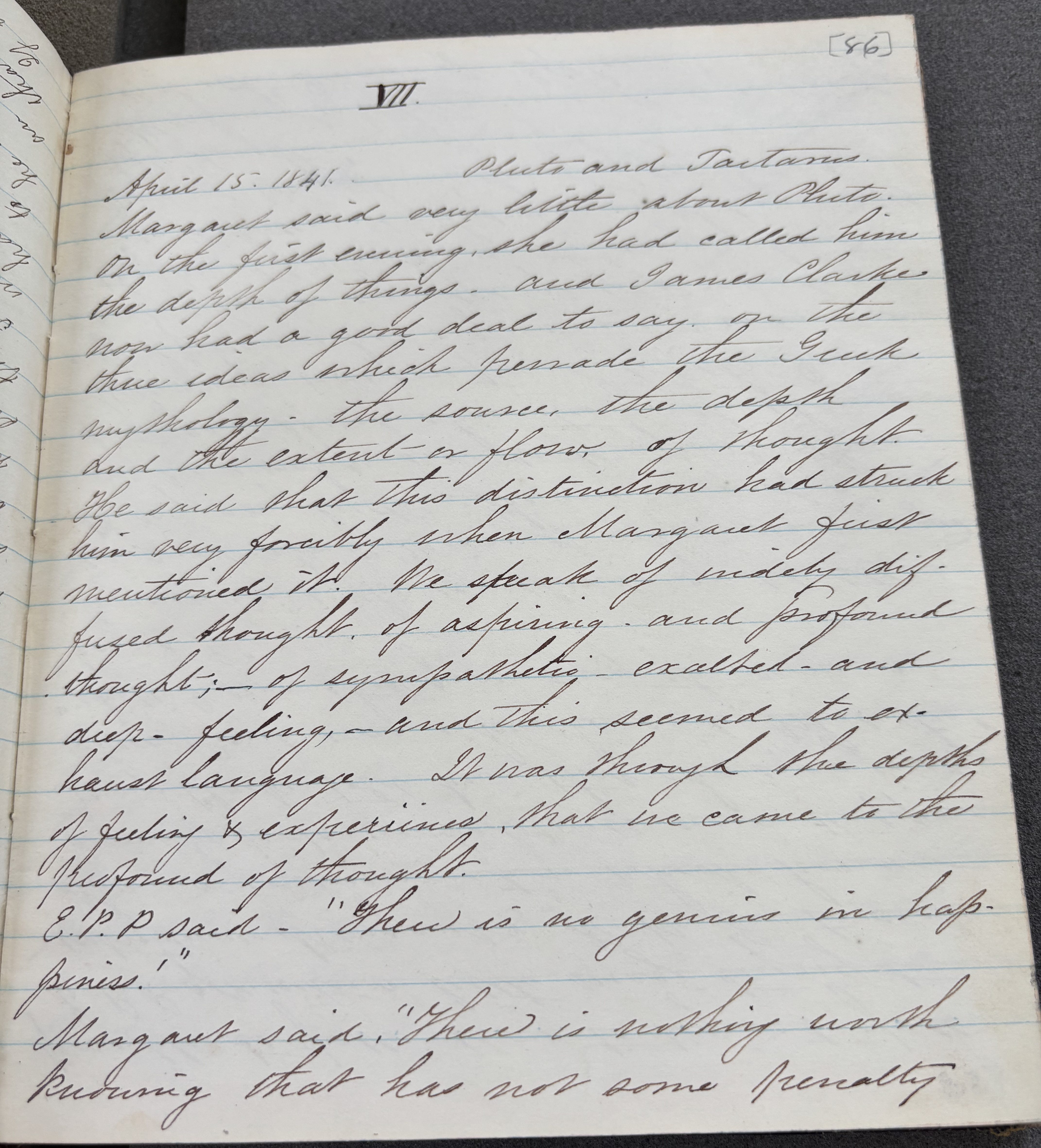
In 1841, Caroline Healey Dall, also an annsister with a summer birthday I missed, recorded a talk by Margaret Fuller about the Ancient underworld and its God, Tartarus.
April 15 1841, Pluto and Tartarus
Margaret said very little about Pluto. On the first evening, she had called him the depth of things, and James Clarke now had a good deal to say on the three ideas which pervade the Greek mythology: the source, the depth, and the extent — or flow, of thought. He said that this distinction had struck him very forcibly when Margaret first mentioned it. We speak of widely diffused thought, of aspiring and profound thought, of sympathetic, exalted, and deep feeling, and this seemed to exhaust language. It was though thtdepths of feeling [is] experiences, that we came to the profound [sic] of thought.
E.P.P. said, “There is no genius in happiness.”
Margaret said, “There is nothing worth knowing that has not some penalty.”
I love this exchange between EPP and Margaret, I can just imagine them interrupting the mansplaining of James Clarke with their one-upping about suffering and genius! This is Fuller at her best, to me, creating abstract rubrics like a cypher or divination. In Woman in the 19th Century, for example, she develops mutually constructive dyads about the flow of masculine and feminine energies in all humans. Interestingly, I would identify her with the “masculine” traits in these dyads. Maybe that’s why I’m curious-not curious about her. It would have been so fascinating to see how she reconciled these energies in herself as she grew older, and navigated sex and motherhood in the 19th century. Even just knowing that this is where her story went — it makes her complex, it makes her interesting, it makes her full.
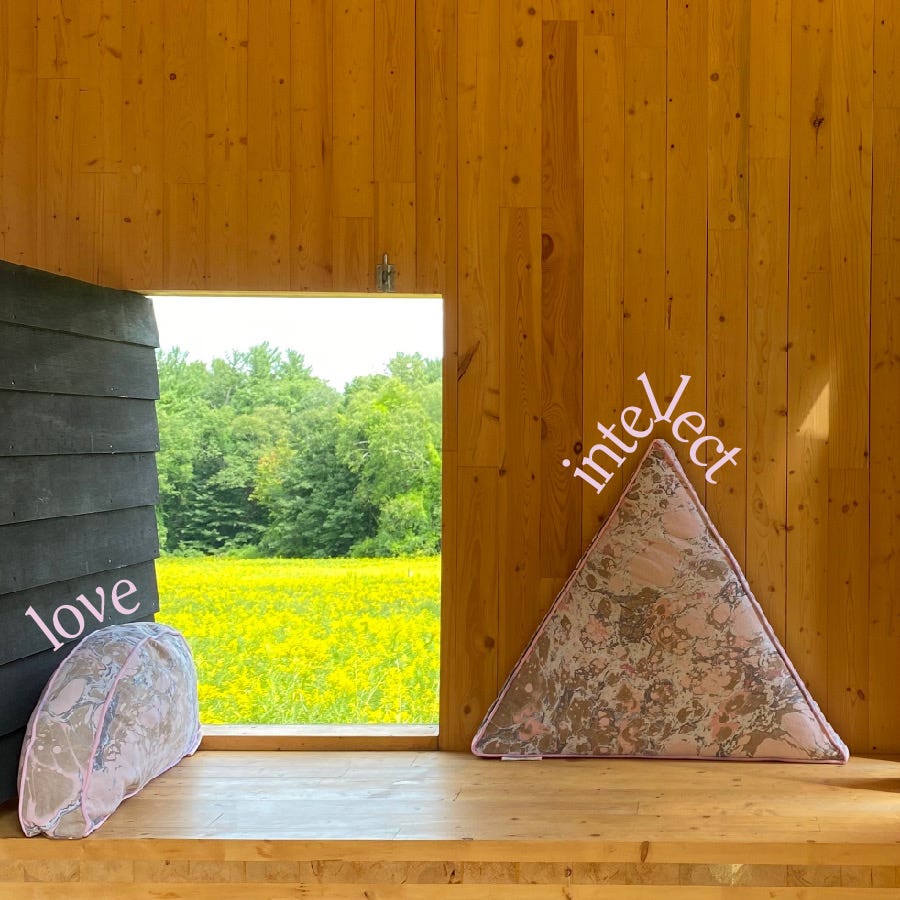
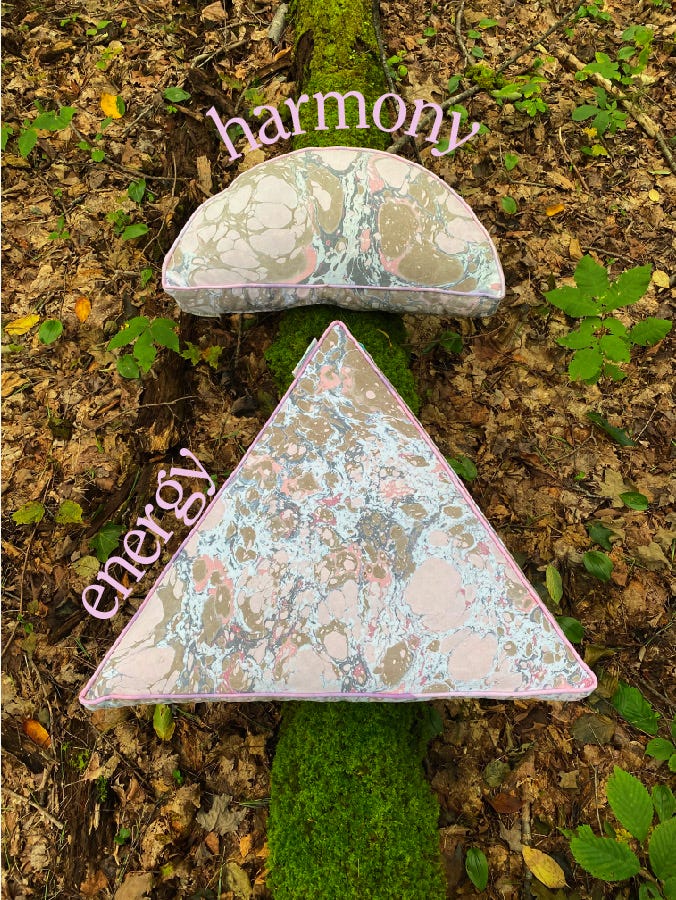

Margaret sought it all: source, depth, and flow. It’s interesting that she did not have much to say about the god Pluto himself. He is not a birth-death being, he is not source. He is only depth. Only at the end of her life had she truly become this dark mother being herself, knowing both sides of the story, healing and writing, birthing and watching the destruction of war.
I couldn’t learn that baby Nino was born in L’Aquila without thinking about the 2009 earthquake that crumbled so many buildings in that town.
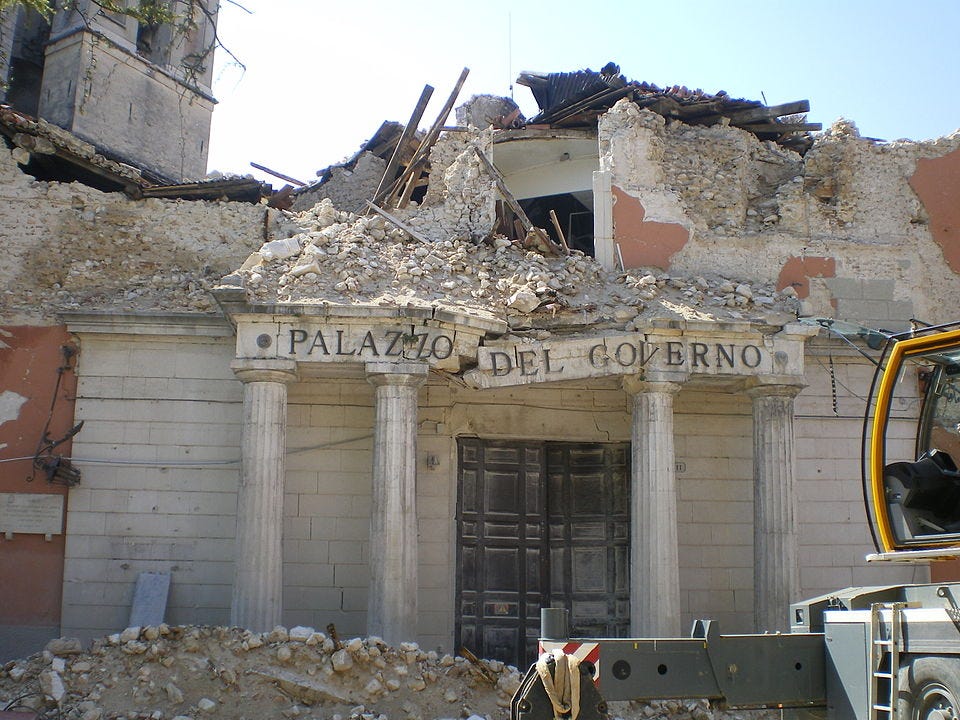

I live in earthquake country again, and pictures like these haunt me.
California, like Italy, is seismic, creating and destroying with the fire of earth itself. Earthquake is the long trembling of the earth, movement from the depths, the emanations from the source of the Great Mother (though her stone was meteoric, not volcanic). Earthquake is the rattle of the sistrum, the wakeup, the invitation to dance with creation and death.
In ancient Rome, Cybele’s temple faced the temple of Ceres, the Goddess of grain and harvest, who was (and is!) celebrated at this time of year for the rescue (or return) of her daughter Persephone from the clutches of Pluto and his dominion in Tartarus. This is the resonance of birth-death. There are so many of them across the feast days. There is so much of it everywhere. There is so much of it now.
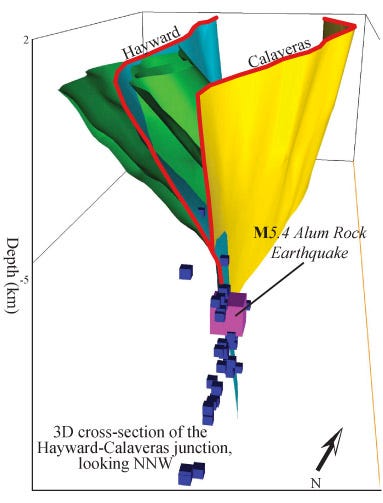
It keeps me up at night, living at the edge like this, all the edges I am on. Margaret relished it, and relished the symbols and deities of this creative darkness. As Margaret wrote to the sistrum, “without thy ceaseless motion /…Life-flow of my natal hour, / I will not weary of thy power.” The motion and power fed her, and she devoted herself to it. How would she have mothered at that edge, if she had lived? As she died with her lungs full of water, did she think of the mountains, or the smoke of gunfire? Did she hold her baby to her, or her book?
Thank you, Margaret, for your fearlessness, for your willingness to jump into the mystery, the flow, and the source. I wish it hadn’t taken you into its depths, so soon.
TIME FOR CAKE
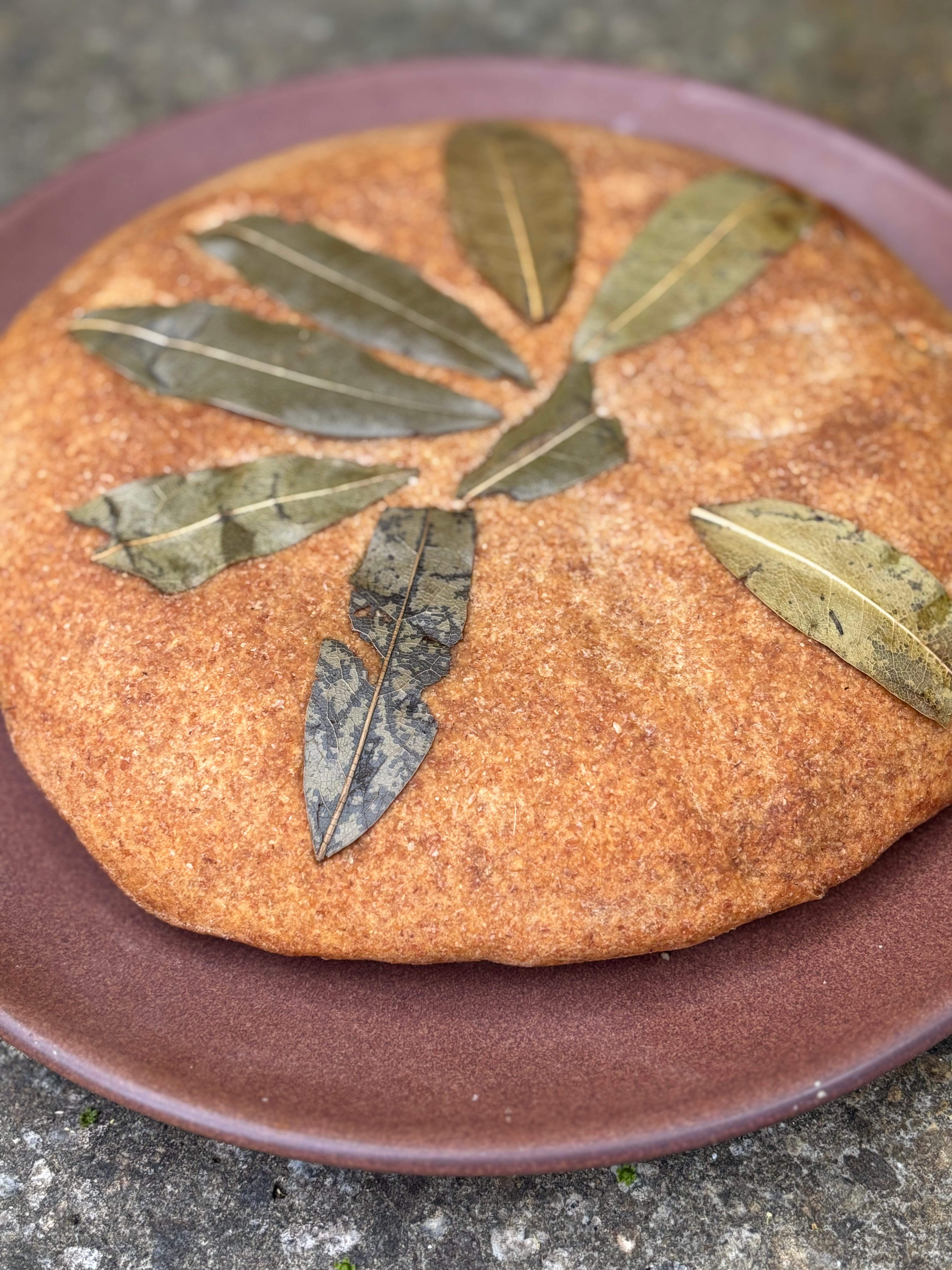
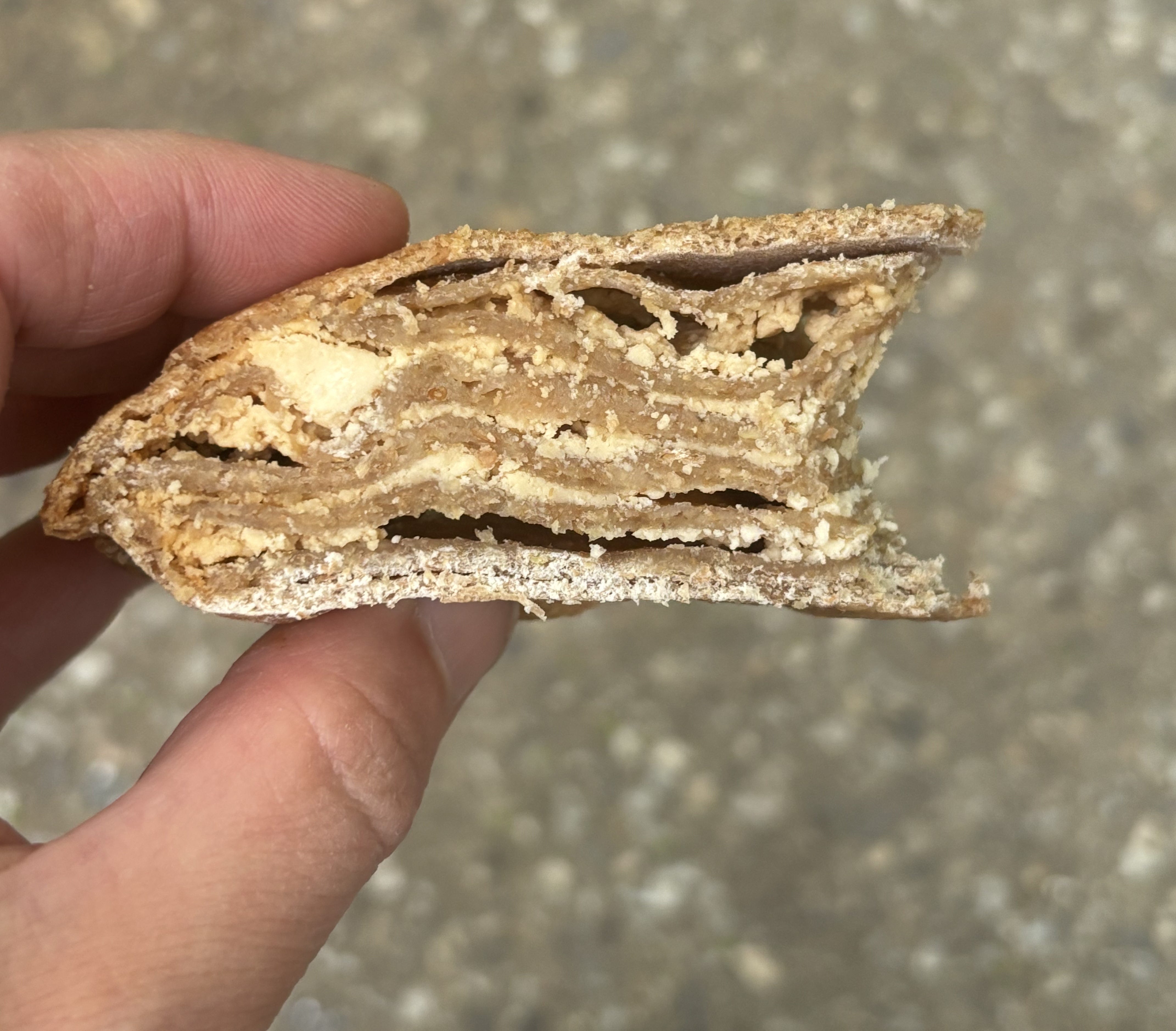
This one was so good. For Margaret I made an Ancient Roman plakenta cake. It is made from layers of coarsely ground soaked spelt grains made into a pliable dough with water, and layered with a mixture of honey and fresh sheep cheese, and then wrapped with a finer, pasta-like dough made with flour, and baked covered on fresh bay leaves. Mine is not as gorgeous, or as honey-filled, as this one. It came out somewhat dry, perfect for slicing and snacking, or offering to whatever deity needs your attention.
Love, love, love! Instrument of the sistrum! I've always been intrigued by / annoyed by the portrait of Fuller that appears in Hawthorne's Blithedale Romance. That character also gets pulled into the depths too soon.